

5 Platitudes Ruining Creative Work (And What To Say Instead)
A listicle guide made in the name of more legit work and better creative processes.

Hey friend! Quick intro if you’re new, or reminder if you’re not: I’m Ryan Weicht. Unofficial title: Quippiest Quipster in the West; official title: Writer at The So What; even official-er title: Director of Strategy at Artemis Ward. This is our Substack, and this is my column, which explores when brands get culture right 🌞 (and wrong 👹).
Read on for the “so what” of why some brand creative just, well, sucks.
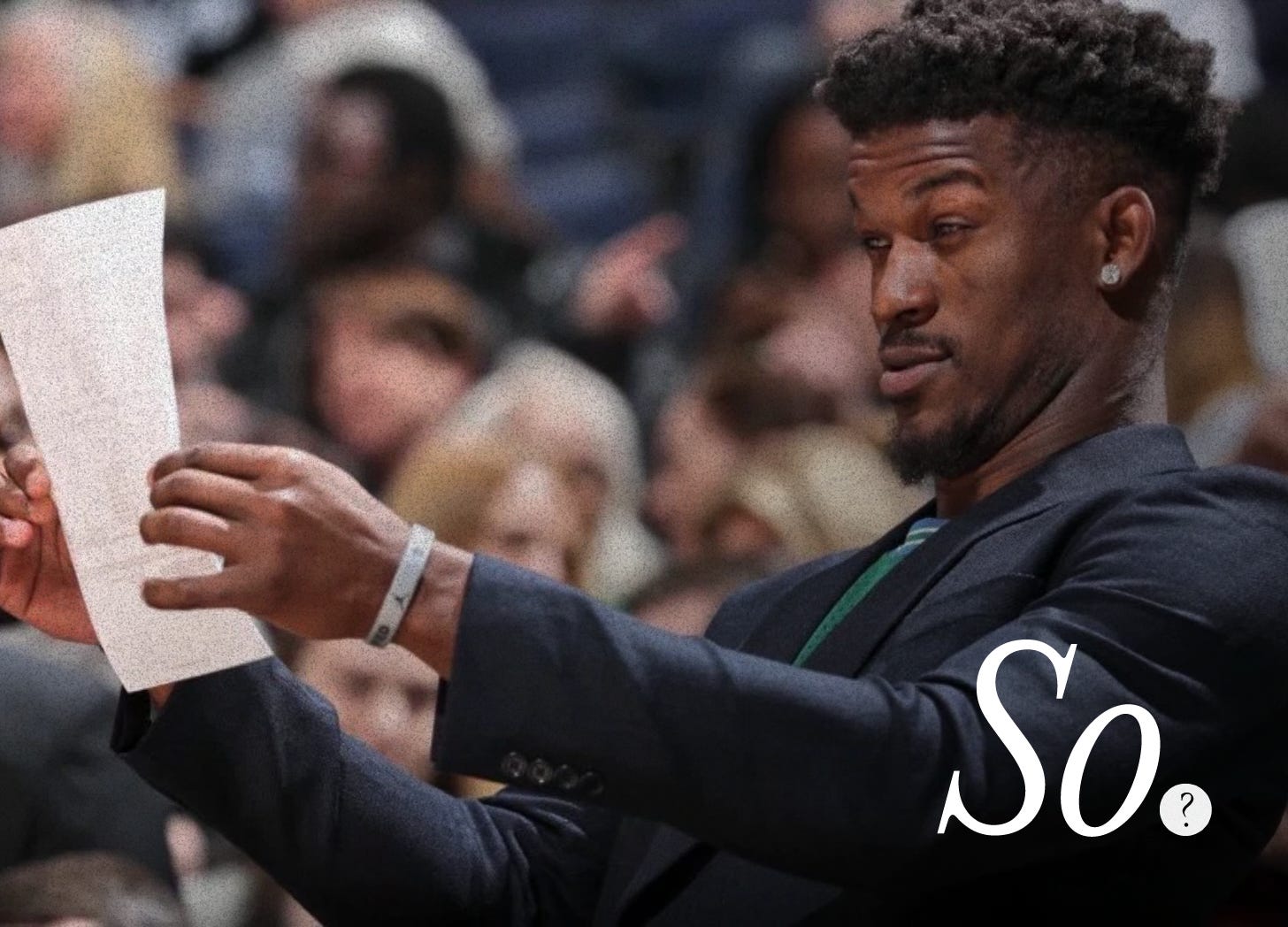
I’m not a gambling man (don’t get me started on sports betting). But if I had to, I’d wager each and every one of you readers have either sat in a creative kickoff, read a brief, or received feedback and felt:
(A) More confused than before
(B) So unclear you’re upset
(C) Like you were just told the exact opposite of what you’re being told now
(D) No creative spark at all
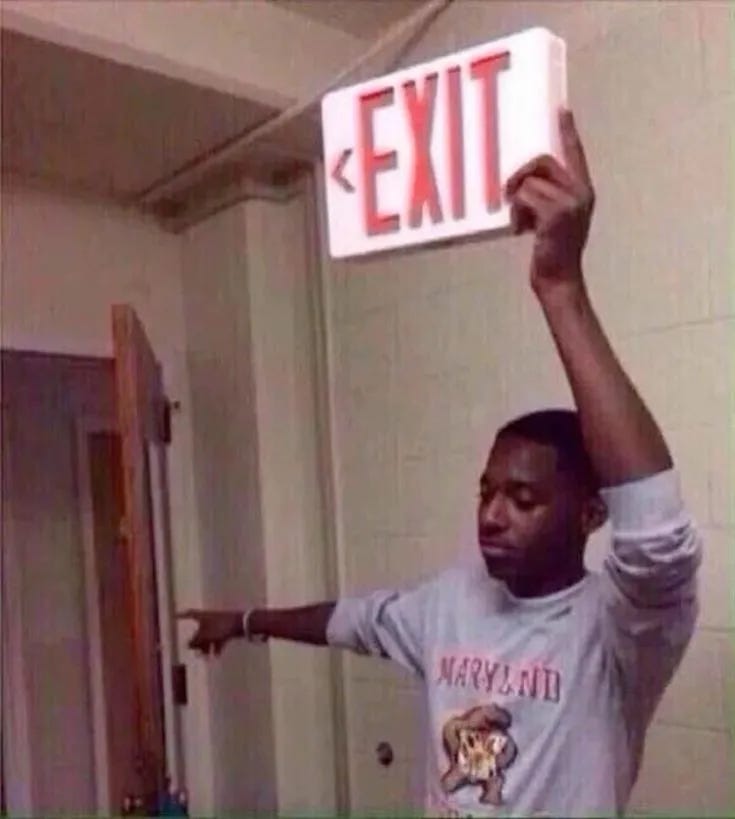
If so, congratulations! You are a normal human being. Come join the club. If not, either I fully don’t believe you, you’re a smart fridge tapping into our network, or you must be the luckiest person alive. Obviously, confusion, frustration, and mixed signals are inherent to peer-to-peer work. The fight against those forces — the struggle to better understand each other and perfect our communication — is just as important as the actual thinking, writing, design, editing, and managing.
But like any procedural mishap, there are some totally torched miscommunication patterns that tend to pop up quite a bit more than others. The good news? We here at this Substack are noting every instance and engaging in battle. Because if there’s one thing we won’t stand for, it’s not having a clear so what 😉 behind what we’re trying to say.
Don’t get me wrong — I’m not saying we’re guilt-free when it comes to misapplying words that are…less than helpful. But, I rather hope that naming some of the top offenders will help us all get better, together, as brands and marketers, from the second we begin a project to its final touches. Because it’s doubly hard to produce good, culturally resonant (and relevant) creative work if the process underneath has lost its way.
Without further ado, let’s spin through…
👺 THE SO WHAT’S POOR PRODUCTION PLATITUDE PROSPECTUS 👹
Vol 1.1, First Edition, Section One, Chapter I
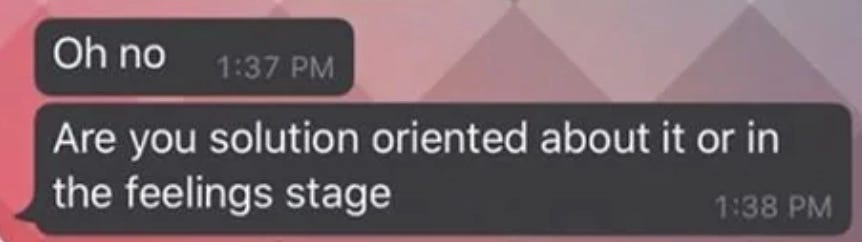
(1) BLANDIFIED 🥛🍞
These are words and phrases that seemingly every single brief, campaign, or positioning statement employs. They’re so overused in creative approaches that including them is either (1) table stakes (2) doesn’t differentiate your work or brand from any others’ or (3) meaningless (or contains too many meanings) because it’s said so often.
Common examples include:
Irreverent, edgy: Ever since Wendy’s started dropping snarky tweets and Duolingo hopped onto TikTok with its blitz of unhinged content, a plethora of stragglers have longed to give their creative the same exact voice. As a result, any viral video now has about 50 brands in the comments all repeating the same various quips that show some knowledge of the online language of the day — but are, altogether, completely safe and totally bland.
Human, conversational: What’s the alternative to this? If you’re not speaking conversationally, to humans, you’re…coding, I guess? A corporate drone? In a room full of Roombas? Of course you need to speak to your audience in their language.
What to say instead:
Go a level deeper than just understanding how young people talk and using those words and phrases. Give a specific genre to the way you want to speak and show up in your content: are you aggressively confident in your product winning? Warm and inviting, bringing viewers into a comforting embrace? Stern and knowledgable, but with a hint of dry humor every so often? These descriptors give a much better shape to your tone and set you apart from others who can’t put things into the right words.
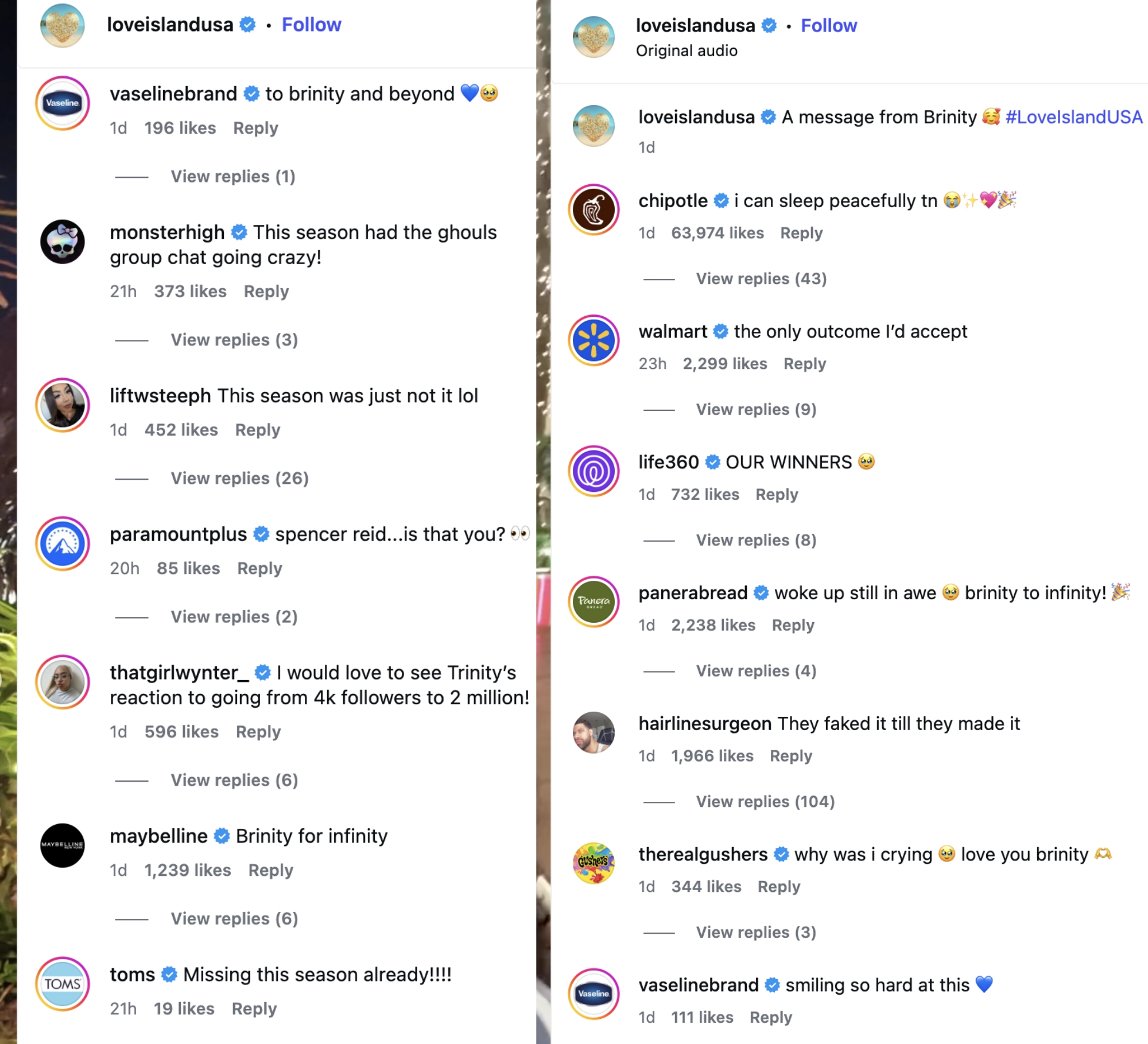
(2) DISREGARDIFIED 👋
These platitudes are almost always thrown into briefs and comments aspirationally, with little commitment — or even intention — to actually follow through. They’re ways that everyone wants to work, or wants their work to be, but they too often are hamstrung by the many realities of legal, risk, brand, budget, numerous feedback layers, or product mandatories that they’re empty promises.
Common examples include:
Authentic, genuine: Nobody wants to be “fake,” but very few brands truly want content that feels completely natural because most are selling something within the first three seconds.
Disruptive, bold, unapologetic, exciting: These words suggest that you’re going to do something with real risk behind it, something with legitimate stakes that could backfire if not executed to perfection. Throwing a few snarky or cheeky quips into every third piece of product-emblazoned content doesn’t produce the same effect.
Edutainment: If you’re going to use this word, you have to be willing to commit to the “-tainment” bit. Content that’s all explainer with no joy or premise otherwise doesn’t earn this label.
What to say instead:
You can say these words if you’re ready to accept that it takes legitimate deviation from the norm — and often risk — to truly embody them. If you’re not ready to let go of every piece of content flashing the logo and selling the product before consumers are settled in, you’re also not ready to be truly authentic, disruptive, or entertaining. And that’s fine. We all have budgets and legal teams and brand safety sticklers. But in that case, spell out the guardrails from the start and let’s ideate around them.
 Tiktok failed to load.
Enable 3rd party cookies or use another browser
(3) RESULTIFIED 📈 📉
You know when you’re hoping for someone to constructively tell you what they’d like to see from your work, and instead they only spit out the outcome they’d like to see? That’s a resultified word: the qualities it might take to achieve their goal are nowhere to be found; it’s just the goal itself hidden in clever framing:
Scroll-stopping, thumb-stopping, viral: If there was a secret formula that makes content viral, we’d do it every time, and every piece of content would always be viral and everyone would get so much attention and push so many sales. Yaaaaay! But there’s not, and that’s the whole point of why creative work requires a lot of thinking and effort.
Best-in-class, elevated: Well, yes, I’d hope we all want the work to be good.
Surprise and delight, whimsy: Dipping a bit into blandified air here, but producing happiness and silliness is simply a reaction you want to happen, not an actual input to chew on.
What to say instead:
To make something viral, best-in-class, or surprising, you have to actually go out on a limb and guess what might make it so. Say what elements of the creative work you think isn’t bound to make something “scroll-stopping”; don’t just stop at labeling it not so. Explain what makes a specific piece of content “elevated”: is it shot on a certain camera, does it feature a special editing technique, does it use distinct words or clever turns of phrase? Without this specificity, creative practitioners are left guessing just as much as they were before the resultified platitude launched into the air.

(4) PEOPLE-PLEASIFIED 🫂 🫶
We all know, and some of us might be, people pleasers. Trying to do it all for everyone, hurting and upsetting no one. It’s a lovely aspiration, but in practice, it requires the individual to be vague, or avoid making decisions, or straddle lines without ever committing to a point of view, ultimately leaving others exasperated. Here lies the marketing version, where you attempt to do too much and then speak to no one.
Common examples include:
Target Audience — Gen Pop: The worst offender. Pretty much saying “please everyone.”
Target Audience — Gen-Z, Millenials, 18–54: These refer to such broad audiences, located in so many different places, with so many different circumstances of life, that you might as well have said “Gen Pop.” These identifiers can only be effective when attached to further demographics.
Target Audience — Core and New Customers: This is a contradiction and a lack of decision making in disguise. Speaking to an audience that’s thoroughly educated on your product is a vastly different task than speaking to those who have no idea who you are (and need convincing).
Target Feature — All our key benefits: Unless you offer very few benefits…it’s likely going to be difficult for you to stuff a mention of every single product benefit into each singular message. And that’s nothing to say of the whiplash it’ll leave your audience with.
Tone of Voice: Professional yet approachable, premium but accessible: “Yet” or “but” aren’t inherently bad when it comes to defining creative elements like tone, and, when used skillfully, can provide particularly interesting twists to work with. That said, they can also be used to hide indecision, sandwiched directly between two opposite words without any further explanation.
What to say instead:
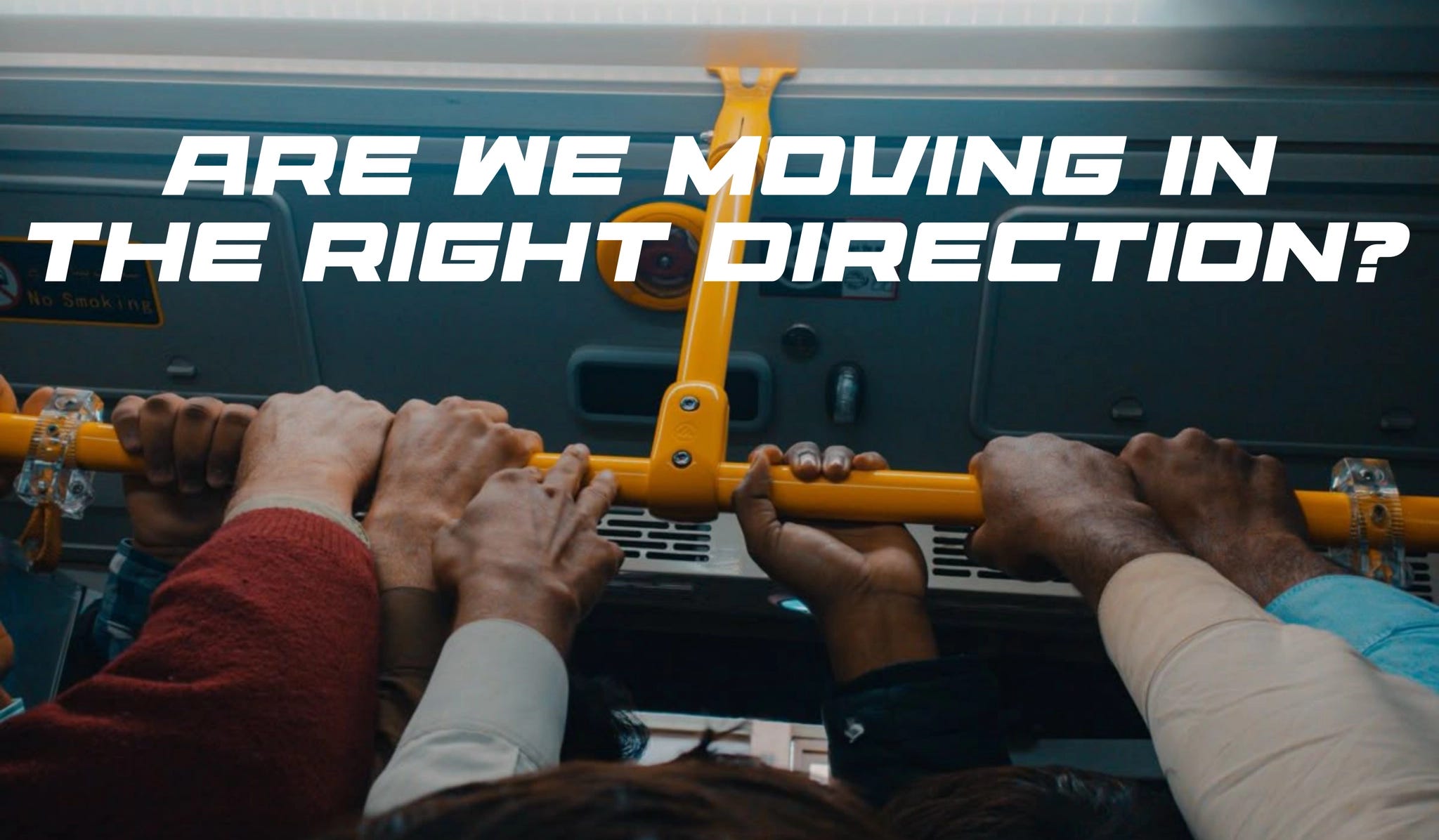
Pick a lane, and own it. I promise you, your message will be much stronger if you can identify who you want it to move most and dig deep into the cultures that audience belongs to. Explain where your audience is located, the interests they gravitate towards, the specific benefits your product provides, and how those benefits can solve a problem in audience members’ lives. And do it in a manner of speaking sharp enough to deliver a consistent voice throughout the work. And don’t do it alone. Work collaboratively, between brands and marketing teams together, and define those parameters through collective research, thinking, and alignment.
(5) CLANKIFIED 🤖 🪫
Yes, we live in the age of AI everywhere. And yes, AI can be helpful in a lot of circumstances. But it should never be the final product, submitted without human review. I’m not here to outright bash the use of AI, but I would love if we all were a bit more educated on the ticks of AI creative (writing in particular) and made an effort to limit them. Or you might just find yourself in a room thinking you’ve got something great and buttoned-up, while those in the know will consider it a COPY-PASTE job frantically done.
Common examples include:
It is not just X, it’s Y: Everyone knows about the dreaded em dash, but people haven’t fully caught onto this turn-of-phrase trope yet. There are a few ways AI deploys the wording, but it generally involves naming an opposite[thing], wedging in a “not” or “isn’t” and following up with the “true answer.” The sentence can usually be consolidated to “it’s Y,” or cut entirely. Almost always, it sounds a lot deeper than it really is.
And that [thing]? It’s the answer: AI loves to pose readers a question and immediately answer it, in as grandiose and show-stopping a way possible. Declarative statements abound in robot prose.
Buzzwords like delve, tapestry, symphony, unlock, seamless, game-changing, landscape, leverage, etc.: This list is endless and ever-changing. It also depends on what tool you’re using. Generally, the words make your subject sound lofty and business-forward, likely the result of endless LinkedIn CEO thought pieces being fed into the data pile. Sometimes, it’s worth it to say things plainly.
What to say instead:
It’s difficult to write without using any of these specific words, phrases, or em dashes. Even as I was editing this article, I caught myself using a “this is not X, it’s Y.” However, the reason these phrases pop up is because they are the statistical mean of all writing, or, at least, of the writing your AI assistant thinks you want to see. As such, adding your own voice, sounding less LinkedIn formal and more you, and using the above devices when they really make sense will both improve your writing tremendously and stop the instant turn-off you’ll face when someone believes they’ve spotted algorithmic hands in your work.
The So What
Whether it’s brand-to-audience, brand-to-marketer, or marketer-to-marketer, these platitudes and poor production prosaicisms wedge themselves everywhere from internal conversations to external work. No one piece of the puzzle is solely at fault, but the consequence is convoluted creative without a clear cultural payoff.
Ultimately, the foundation of good creative is razor sharp, specific consensus on four decisions:
Who it’s for
What it needs to say
How it needs to sound
How it wants to reach its goal
And each one of the platitudes above dodges a decision on one or more of those key points. “Gen Pop” dodges who it’s for. “Authentic” and “bold” dodge what it needs to say. “Elevated,” “whimsy,” and “edgy” dodge how it needs to sound. “Thumb-stopping” dodges how it wants to reach its goal. And AI writing deployed without prompting, review, revision, and tuning dodges it all with a substance-less algorithmic soup.
So, the next time you delve into a tapestry of elevated seamless creative processes leveraging best-in-class, scroll-stoping techniques to develop an unapologetically edgy but authentic campaign that unlocks the hearts and minds of Gen Pop, consider going a level deeper. Work with the teams around you to define a direction. Make a decision and explain it concisely and, specifically, why you did so. Commit to an actual who, what, and how, and come out the other end with work that feels like it has a shape and a soul. The risk will be thrilling.
✉️ If you haven’t yet subscribed, click the link below so you don’t miss the next one with Colin Moffett.
Read more from Ryan:


And, don’t miss last week’s post from Olivia:
