

Thirst Trapped by Amazon
And now a word from our sponsors (whether you like it or not).

Howdy! If you’re new to our Substack 🐣, I’m Ryan, writer at The So What and director of strategy at Artemis Ward. Come sit around the campfire (this column), where every month-ish I write about when brands get culture right 🌞 (and wrong 👹). Yeehaw!
Read on for “the so what” behind the Off Campus product placement palooza.
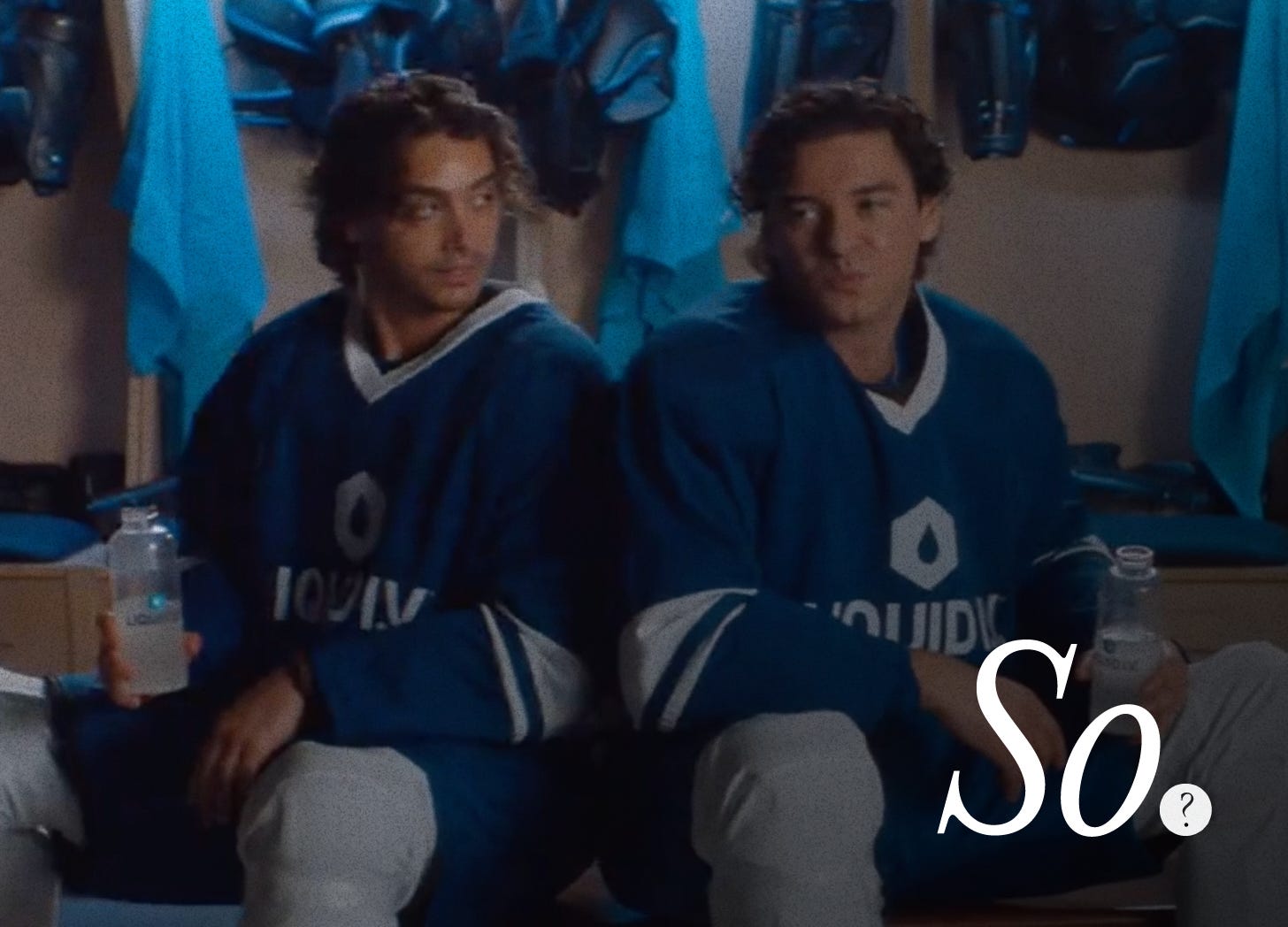
If you (1) have been online sometime within the past two weeks, (2) are a BookTok boy or girlie, or (3) are within three degrees of someone who is, you’ve probably heard of Off Campus: Amazon Prime’s hit new steamy drama based on Elle Kennedy’s books that has viewers across the country kicking their feet like it’s swim practice. Hot off the heels of its book-based, FYP-sweeping cousins Heated Rivalry and The Summer I Turned Pretty (Season 3), the show is the latest in a string of streaming triumphs that have almost instantly spun up ravenous binge-watching fandoms. And with a sniff of success, as we all know, comes brands wanting to get in on the action.
So, though many a So What writer would gladly chat about their biggest swoons with you (hit up our comments and Olivia DuCharme), the thirst trap I’m covering today doesn’t involve hockey hunks. Nay, we’re staying hydrated with the endless stream of product placement that Liquid IV delivered across the eight episodes of Off Campus Season 1.
For those unaware, Liquid IV wasn’t just tucked away in an offhand moment during one episode. Rather, the brand was woven into a primary arc of the show’s plot (sponsorship of the fictional Briar University’s hockey team) — along with shoppable pause ads and a 30-second spot featuring the in-character actors. And while there was also no shortage of space for run-of-the-mill product placements (see TikTok and Reddit for proof), it was Liquid IV’s brazen integration into the storyline that caught my eye.
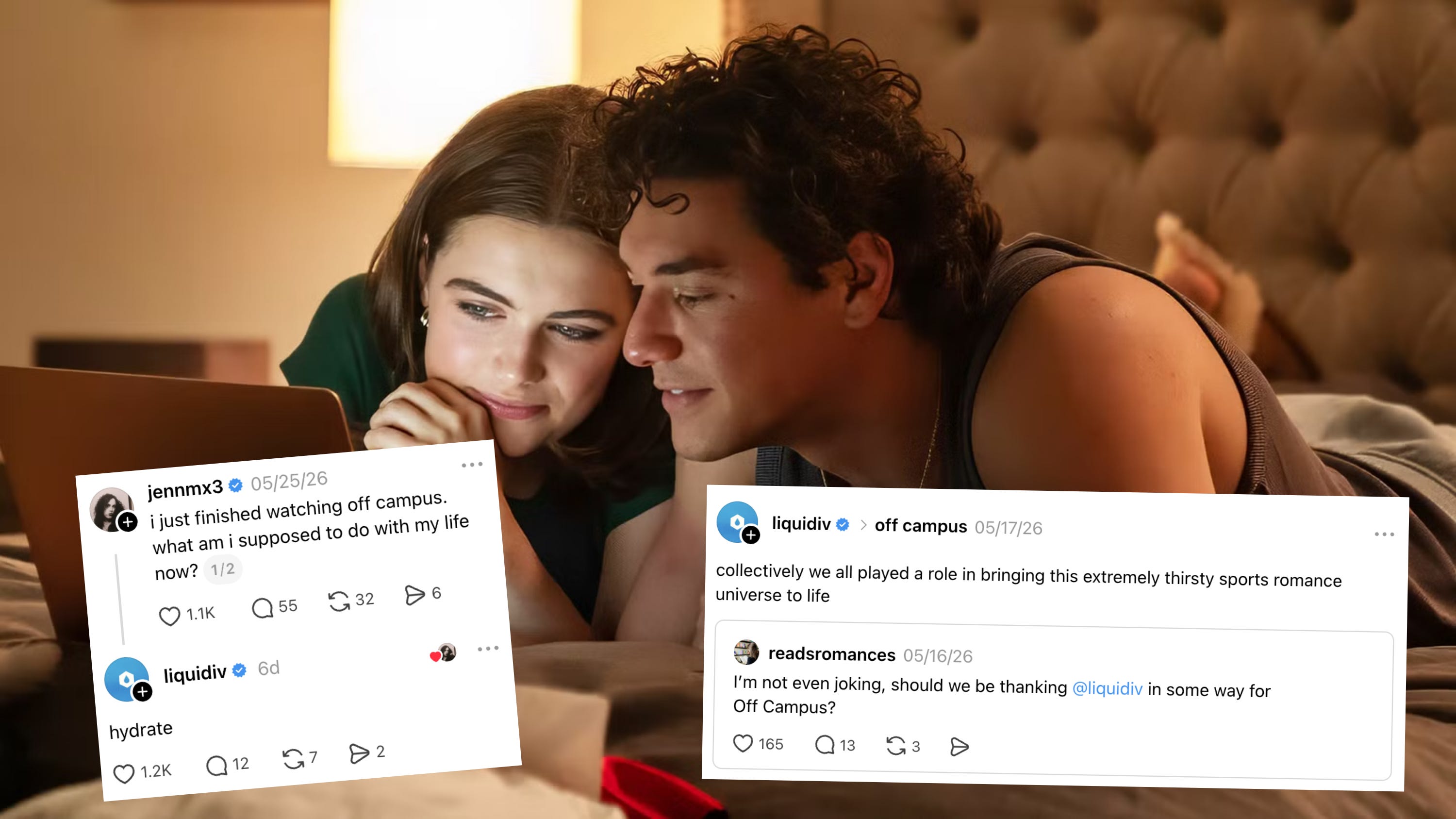
As Carina Adly Mackenzie, a showrunner and novelist who has navigated these deals herself, pointed out on Threads, the brand’s fictional “sponsorship” was a vehicle to introduce genuine conversations about the characters’ financial situations, further relationships, point out how corny ad shoots can feel, and even hint at how many buyers really use the product: for a hangover-killing hydration boost following a night out. The brand didn’t mandate unrealistic positivity, but rather tried to find legitimate, human ways into the conversation.
That’s not to say that everyone instantaneously accepted the product placement. Plenty of people took to the internet to spoof over-the-top sponcon or even share how the advertising made them want to buy the product less. And many of the scenes (cough, the bar scene) could feel shaky in their execution to ad-attuned viewers. But by and large, the parties of this partnership are likely marking this a success: the show got its funding and exploded in popularity while the brand got immense exposure and faced relatively little internet skewering.

Ultimately, whether or not Liquid IV executed a smooth landing is up to you to decide; what we’re more interested in is the self-awareness with which they did it all. Not only was the brand clearly in on the bit during the show itself, it kept that same energy in its ads and social presence as the show took over our algorithms, including replies to seemingly every post mentioning Liquid IV (see here, here, here, and here) as well as its own organic online sarcasm. This extended, meta humor bought the brand even more grace, turning what could have been viewer ire over sponslop into a harmless joke at worst and appreciation for unobtrusive show funding at best.
In today’s age of everything-has-and-is-advertising and brands-have-tried-everything-under-the-sun sponsorships, meta humor and self awareness is hardly a new tactic writ large, but its application to product placement in Off Campus might be.
Yet just because it worked for Liquid IV doesn’t mean I’d giving a resounding endorsement for other brands to follow suit. For one, they’d have to have the same instincts when it comes to finding a show ready for insta-stardom, a plot line where their product slots easily into the characters’ world, and the willingness to be butt of the joke. But even with that perfect trifecta, I don’t think this is a solidified strategy moving forward. At best, it’s a brief, fragile détente.
Because now that it’s been done once, the window where self-aware product integration feels disarming rather than disappointing is already closing. Once every show is doing meta placement, it stops being charming and becomes another irritating trope. The distance between cool and cringe is a lot closer than you might think.
So the ultimate pattern to pull from this thirst trap is that self-awareness, like any other bit, has a half-life. It’s a hard thing to replicate on purpose, because the moment it becomes a playbook, it’s just another recognizable piece of the performance. Audiences have already learned to see through one layer of advertising. They’ll learn to see through two.
✉️ If you haven’t yet subscribed, click the link below so you don’t miss the next one with Quinten Rosborough.
Read more from this author:


And don’t miss last week’s post:
