


Welcome to The So What, a newsletter decoding cultural moments, why they matter, and what brands should do next. The So What comes to you from Artemis Ward, an independent creative agency in DC and NYC. I’m Olivia DuCharme, director of content. Read on for the “so what” of why creators are tired of partnering with brands.
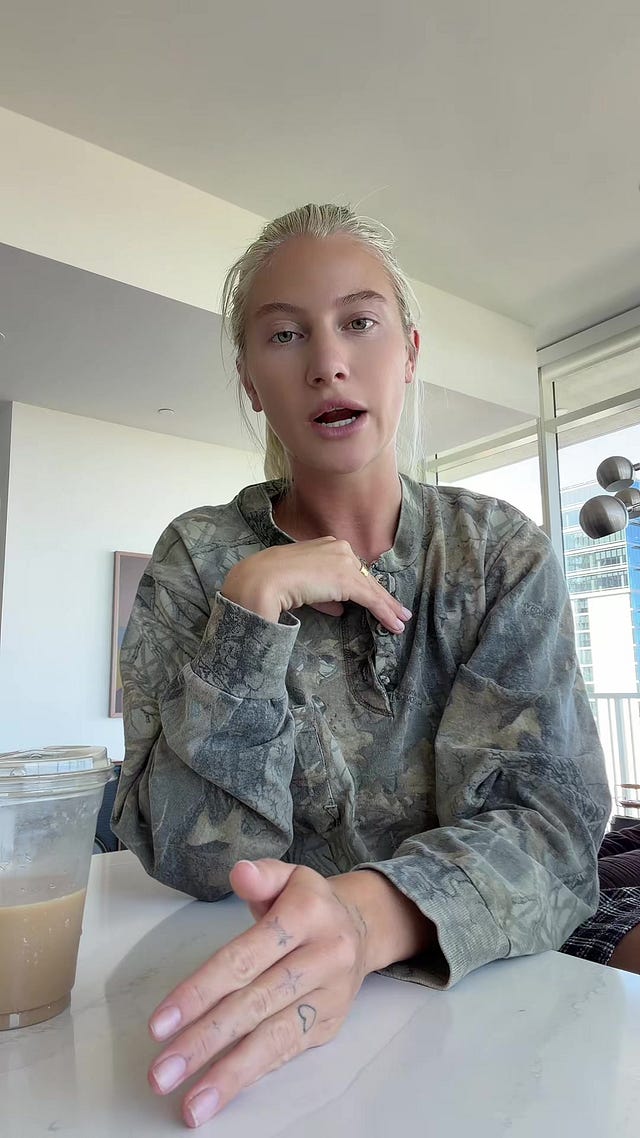
A few months ago on a Metro ride home from work, I stumbled across a TikTok that stopped me (thankfully, not the Metro) in my tracks. It came from creator Ken Eurich, who has approximately 1.8M followers on TikTok — although, later, I’d realize this post came from her spam account @dmbrblnd, which, you know, has but a measly 750k followers.
 Tiktok failed to load.
Enable 3rd party cookies or use another browser
In the video, Eurich takes issue with the creative constraints that so often come with working with brands. The irony, she argues, is that brands want their ads to feel “authentic and organic” to the creator, but then give profuse notes that do the exact opposite: show the product within the first three seconds, move this clip here (and that one there), add text on screen, strengthen the hook. The result is content that no longer sounds like her — and, she argues, performs worse because of it:
What [brands] mean [when they say they want authentic and organic content] is they want me to speak in a natural tone, but sell the hell out of their product and give all the benefits of the product into it…then it’s like, immediately we lost the plot. You immediately took away my natural tone and way of speaking just like that. And it’s enough for someone to scroll within five seconds of seeing the video…and then the ad doesn’t perform, because once again, it’s not authentic or organic to me. But, I mean, they’re the ones paying, and that’s what they want. So what are you gonna do?
My first reaction was one of surprise (is it really a good idea to put your kind-of-employers on blast?). But then, after a little thought, another question came to mind: how frustrating must her experiences with brands have been for her to make a video about it, knowing that plenty of viewers might see it as an influencer complaining about having to do her job — and knowing that plenty of brands who have worked with her might see it and end their relationship?
As I scanned my Metro card at the turnstile and walked towards the elevator, the video faded from my mind — that is, until about a month later, when I saw another that was eerily similar.
 Tiktok failed to load.
Enable 3rd party cookies or use another browser
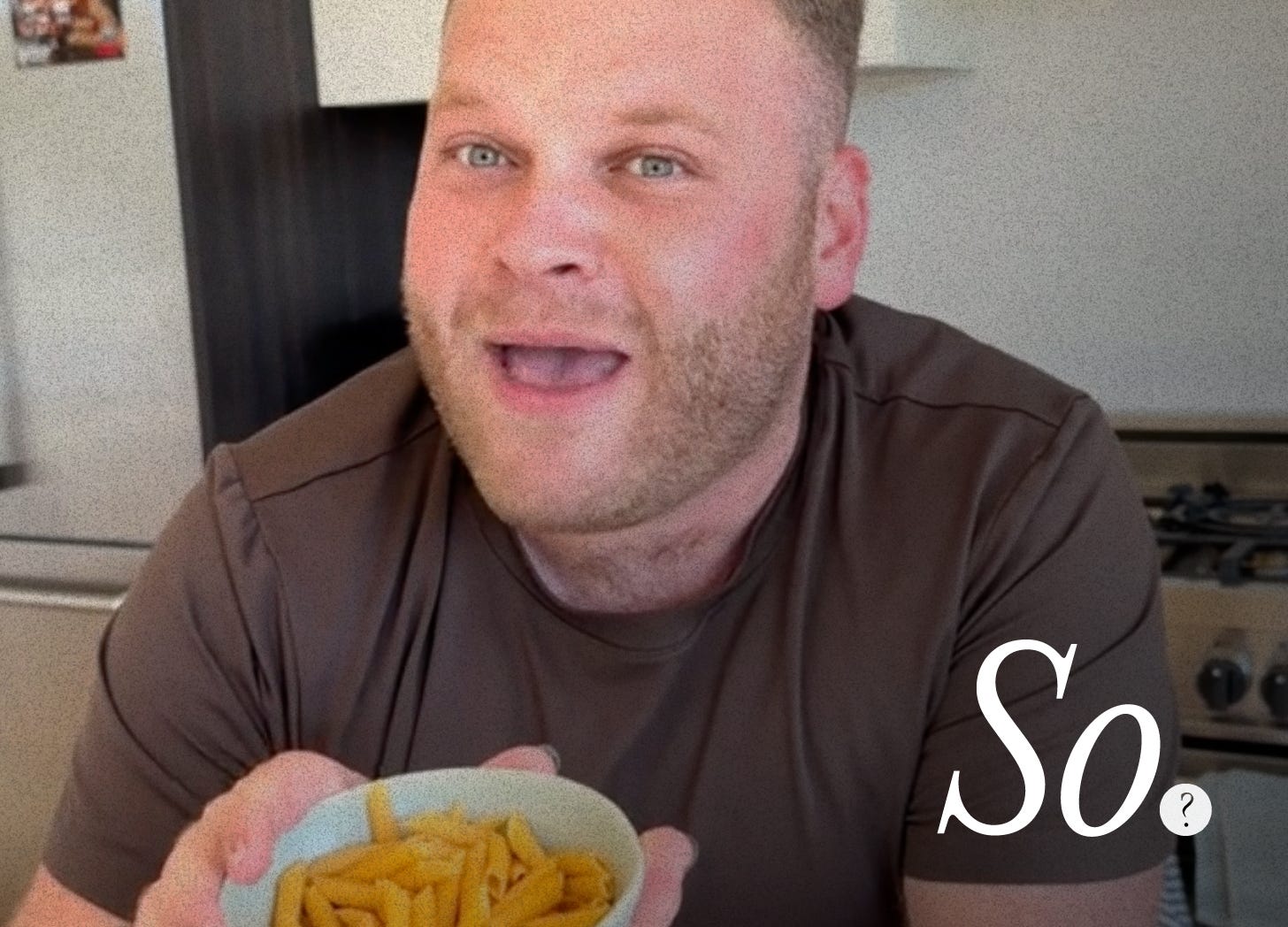
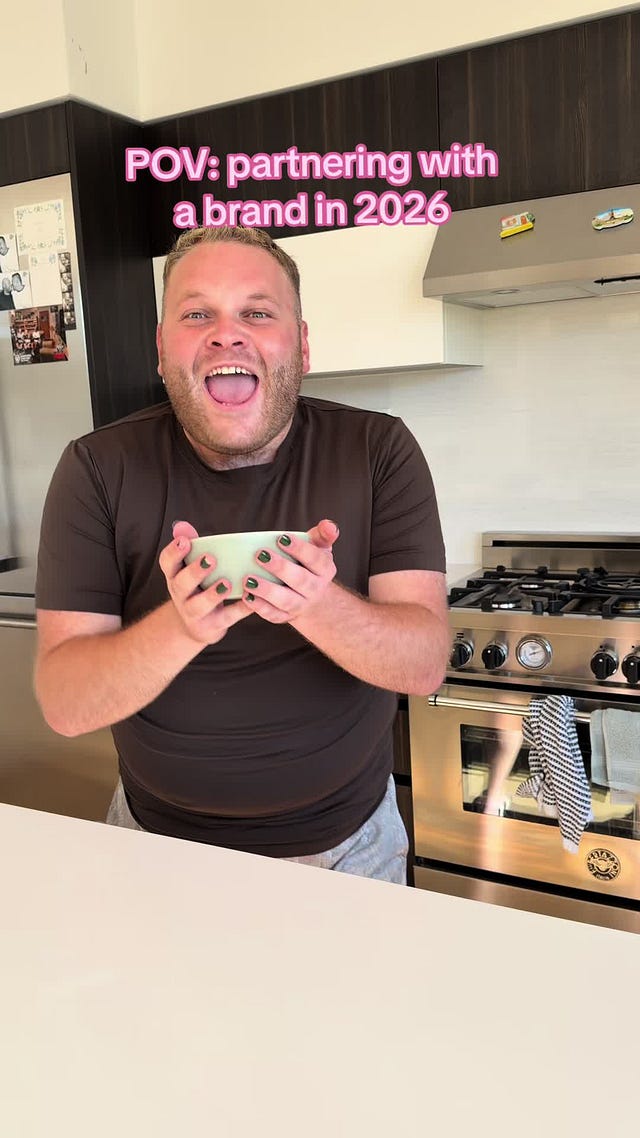
In this skit, creator Bran Edelman (also known as Bran Flakezz) plays both sides of a fictional brand partnership for a fictional protein pasta campaign. The brand tells “Bran” they want the content to feel “super organic,” then proceeds to prescribe every scene, every line, and exactly where he should be filming. When “Bran” pushes back, saying he normally films “off the cuff” because it feels more authentic, the brand has one more request: the product, the partnership disclosure, and the words “protein penne partner” all need to appear within the first three seconds.
Bran points out, “It might really make people scroll,” but the brand insists anyway.
When it’s time for the performance report, we learn the video didn’t convert. “Bran” says he feels like he “could have done a really cool video” but was just trying to follow the campaign guidelines. The brand’s response? They need to work with creators who “know exactly who their audience is” and can “make content that performs.” Oof.
The video (the real one, not the fictional one Edelman describes), now sits at 3.4M views and nearly 400,000 likes. But what really caught my attention was the reaction in the comments. While Eurich’s comment section contained a bunch of creators commiserating about the indignities of sponsored content, Edelman’s comment section was filled with audience perspectives:
“i’m partnering with…” is an IMMEDIATE skip for me
As a consumer… I really need brands to stop doing this. I scroll immediately
TikTok is turning into QVC and I’m pissed about it
People hate being advertised to because every two seconds something is an ad. If you’re going to do a sponsorship it should be something that 1) makes sense for your brand 2) something you like and use without a sponsorship.
In other words, audiences seem to be having the same gripe creators are. From the product shot to the scripted hook, the formula designed to capture those precious first few seconds of attention are instead signaling to audiences, “This is an ad! Hurry, scroll, take cover!!” And when audiences do scroll, brands lose not only views, but also the goodwill of the people they’re trying to reach.
The So What
And here’s where I’ll show my cards. I see this stuff all the time in my work, and I’ll be honest, it’s unfortunate. What gives creators their following — their personality, their spontaneity, their unique spin on whatever the topic — are the exact things brands lack. Brands do not have the same freedom in messaging as individual people do, which is why they need creators in the first place. The problem is that those qualities brands need from creators also happen to be those that become constrained (if not lost) when brands start prescribing how content should look.
Of course, there are good reasons brands have strict requirements. Some reasons are legal or regulatory. Others are necessary to make sure a product is accurately represented. Some are there because, at the end of the day, a brand needs its investment to do something for the business. You can’t exactly hand a creator a product and say, “Do whatever you want.” Like I said, legal!
But I can’t help but wonder if we’ve grown too comfortable treating every preference as a requirement. There is a difference between something a creator has to say and the exact way we think they should say it. There is a difference between giving someone the objective and telling them how to achieve it.
That distinction feels especially important now because people are spending more and more time encountering advertising in spaces where they expect to be entertained — just look at the influencer fallout at the U.S. Open. People know they’re being advertised to all the time. They know creators are getting paid to do it all the time. They know brands want them to buy something all the time. So why not make something people actually don’t mind watching?
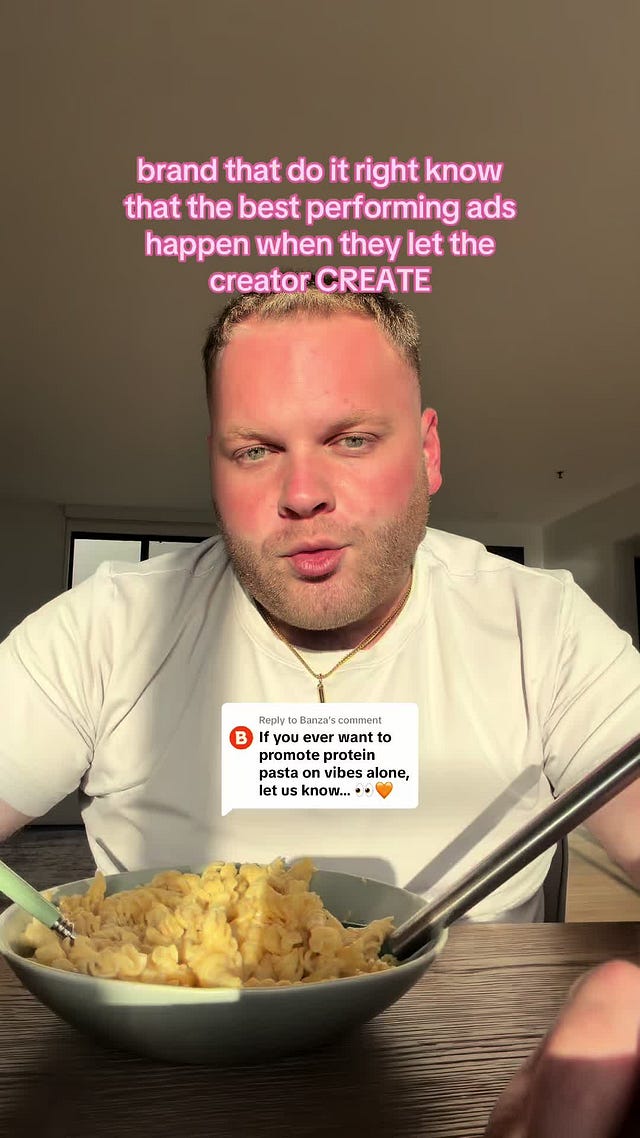
Take Banza, the chickpea pasta brand that commented on Edelman’s video. They recently partnered with him on a video of their own, and it performed pretty well, all things considered.
 Tiktok failed to load.
Enable 3rd party cookies or use another browser
I won’t say the ad is completely devoid of brand elements (peep the perfectly buttery mac and cheese), but you can feel Edelman’s personality coming through. It feels like something he would actually make, which plenty of his followers took to the comments to mention. And it’s not like Banza lost out either. Their name and their product are front and center. As for the rest? Well, as Edelman says, Google it.
✉️ If you haven’t subscribed, click the button below so you don’t miss the next one.


