


Welcome to The So What, a newsletter decoding cultural moments, why they matter, and what brands should do next. The So What comes to you from Artemis Ward, an independent creative agency in DC and NYC. I’m Colin Moffett, co-founder and CEO. Read on for the “so what” of the rise of AEO.
Martha Powell is 24, and she’s from Newport in south Wales. Often, in unfamiliar situations, she finds herself drawn to other people with Welsh accents since she worries that people may “make assumptions” about her based on the way she speaks. She also admits to “softening” her accent in some situations depending on where she is and what the moment calls for. This is a calculation so many people make in rooms full of strangers: do I sound like myself, or do I change the way I speak to fit in?
Reading about Martha in a recent BBC article made me think about how often brands weigh that same question. Brands code-switch all the time, but unlike Martha, they do it at scale. They change how they speak depending on who they’re trying to reach, where they’re showing up, and what they want to be understood as (read: cool). You can see this most clearly in the rise of “chronically online” brand speak that now litters Instagram and TikTok, designed to signal that a brand understands and belongs to Gen Z’s internet culture.
Now let me pause for a quick second and just acknowledge that both the stakes and the consequences are different in the comparison that I’m about to make. The situations that Martha is dealing with are based in prejudice, and the way she speaks can affect how she is perceived and even her livelihood. That’s not the same thing as a brand changing its tone. But I do think the comparison points to a larger shift in how we are communicating right now — and this shift has consequences for both brands and culture writ-large.
Because increasingly, we’re not only communicating with people; we’re also talking to machines. As AI becomes a bigger part of how people find information, marketers are spending more time thinking about how these LLMs find and interpret information — and, naturally, how to make sure their brands appear in the answers they generate. The practice of shaping your website and content so that your brand is more likely to appear in those answers is called Answer Engine Optimization, or AEO (think of it as the next generation of SEO). You’ve probably already used an “answer engine” without realizing it. Instead of giving you a list of links, an answer engine (like an AI chatbot) reads a question, pulls together information, and gives you a direct answer. But unlike traditional SEO, which is largely about helping a search engine find your content, AEO is also about helping an AI system understand and confidently repeat it.
But here’s the thing: AEO rewards a very particular way of speaking. It prefers language that is clear, explicit, and simple enough for a machine to interpret. Accordingly, AEO consultants are teaching brands to use the same kind of language: straightforward, authoritative and very, very neutral. Which brings me back to accents.
Recently, researchers at York University and the Vector Institute tested how leading language models respond to different varieties of English. They found that the models often favored Standard English over dialects, even when the meaning was the same. In other words, the models weren’t simply listening to what people were saying; they were also showing a preference for how they said it.
Here’s the important difference between human bias and machine bias. At least a boss or someone at a networking event hears the West Country accent and decides what to do about it. The machine simply corrects it without telling you, which indicates that there’s a “right” and “wrong” way to speak and that the “wrong” way needs to be “corrected.”
And that creates an interesting problem for brands. If we know AI systems favor standardized language, we have an incentive to make our language more standardized before those systems ever encounter it. We sand off the slang and the regional expressions, the quirks and the specificity and the cultural cues that make language feel like it came from a particular group of people — all to make ourselves easier for a machine to understand. And, sure, brands can optimize their language to be clear and legible to a machine, but that doesn’t mean they actually understand the people they’re trying to reach.
And this is where a lot of brand research falls short. We ask people to react to language we wrote, then report back on what they think of it. We hand people our vocabulary and then congratulate ourselves when they hand it back. If we actually want to understand an audience, we need to start with their language — not ours. What words do they use when they talk about your brand online? What phrases show up in search queries and on Reddit? What do they say in support tickets? What do they say when you’re not in front of them? Understanding these nuances is how you learn the “accent” of the room you’re trying to be a part of.
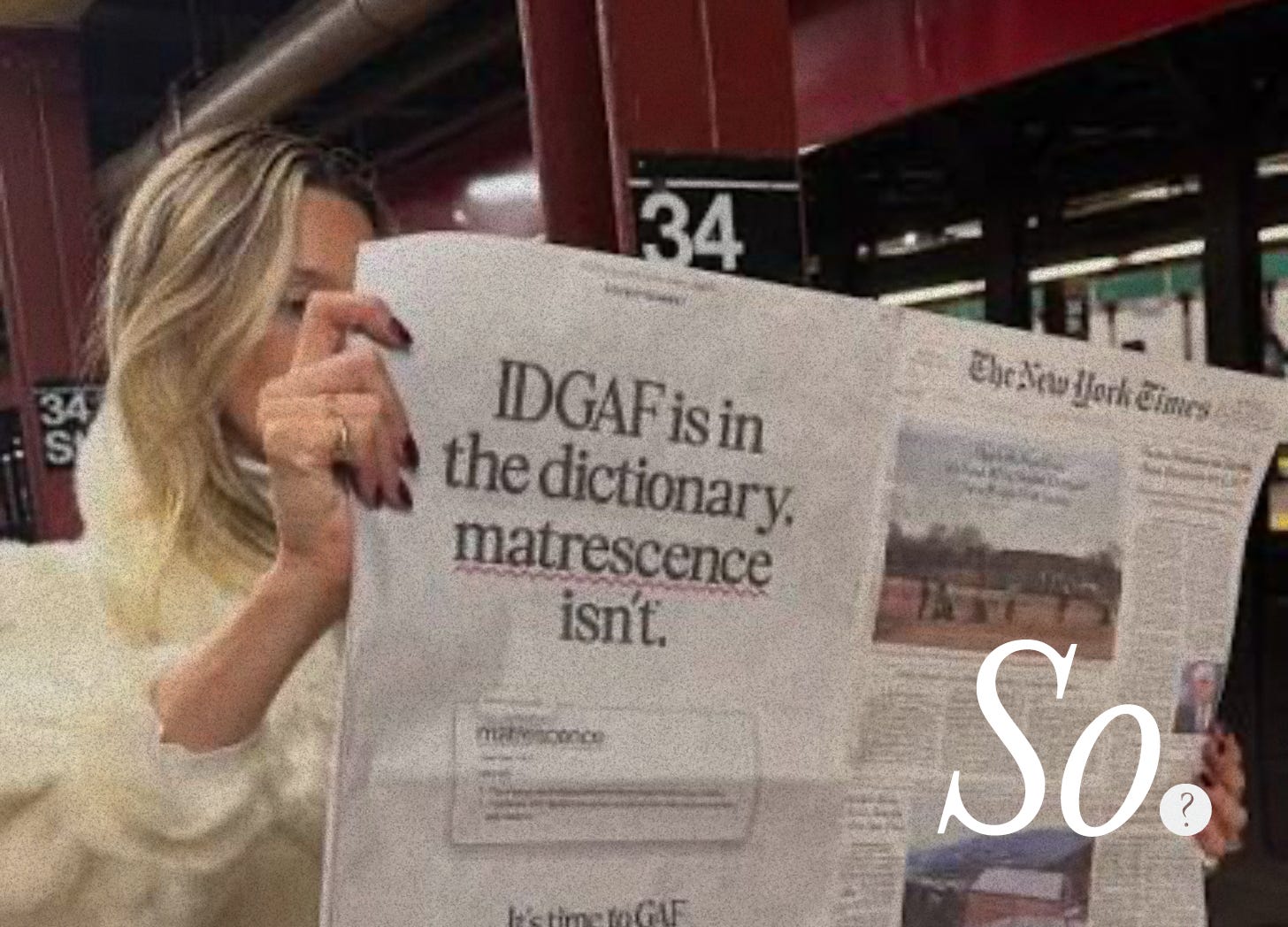
A great example of this “accent” fluency is from Peanut, the social network for mothers. Recently, the platform partnered with baby-care brand Tommee Tippee on a campaign to bring the word matrescence — the physical, psychological and emotional transition of becoming a mother — into the mainstream. While the word was coined in the 1970s, most people still don’t know it, and it isn’t recognized by major dictionaries. That’s what makes the campaign interesting. They didn’t invent a new phrase for their audience. They noticed their audience was living something the language hadn’t caught up to yet and put a spotlight on it.
The So What
The funny thing about accents is that they don’t appear out of nowhere. They are the result of history, provenance (see my last piece), and proximity. It reflects where you’ve spent time and who you’ve spent it with. This is exactly the hard work your brand should be doing to stand out. Ask yourself: have you spent enough time with your audience to actually sound like you know them?
Here’s a test you can try on your language to gauge its fluency. Put a competitor’s name in your sentence and see if it still works. If it does, you don’t have an accent; you have category language, and you need to double back and hang with your audience some more.
Or just think of Martha at that networking event. She wasn’t scanning the room for the most ”legible” or “standard” voice; she was listening for the one she recognized and that would recognize her.
✉️ If you haven’t subscribed, click the button below so you don’t miss the next one.
Read more on this topic


A quick shameless plug. Our agency works with clients to better understand how to connect with their audiences. We create Fluency Frameworks that help fuel your marketing and campaign work with creative that can connect meaningfully with audiences.