


Welcome to The So What, a newsletter decoding cultural moments, why they matter, and what brands should do next. The So What comes to you from Artemis Ward, an independent creative agency in DC and NYC. I’m Joel Daly, co-founder and CXO. Read on for the “so what” of what gets lost when “AI” becomes shorthand for “bad.”

The most cutting aspersion you can hurl at a creative professional today is that the work that they’re so proud of is AI slop. It has become sport for digital detectives to try to sniff out clues that something has been created by generative AI — too inane or uncanny or trite to be the product of a real person. Every em-dash is suspect and every odd shadow an indictment.
But to some, there’s a broader, more profound tell of AI infiltration: everything looks, reads, and sounds the same. So many posts, websites, articles, and redesigned brands seem way too mundane and standardized that we assume a machine must be behind them.
This has reached a fever pitch in critique of almost every new thing in popular culture. Even the recent colossally awful and offensive Good Good Golf and Callaway Golf ad was accused of being an AI idea — as if humans couldn’t come up with an idea that bad. Closer to home for me, in D.C. Reddit communities, people have been posting and dissecting promotional flyers from bars and restaurants, calling out the “obvious” signs that they were made with AI. Nonsensical letters, factually incorrect renderings of Metro stops, an artificially generated sub sandwich — all evidence entered into the record.

Some of this criticism is fair. If you’re posting a flyer advertising your restaurant, you should, at bare minimum, use actual pictures of your food. An AI-generated sandwich is not a great substitute for showing people what they can actually order (not that a stock photo was much better). But here’s the problem I’m seeing with this local witch hunt: “AI” has become shorthand for “bad,” and that shorthand lets us off the hook. Once we spot the tell, we stop asking what, exactly, is wrong with the work.
Which raises a more interesting question: what are we actually objecting to when we say something we don’t like is AI? Because, let’s get real for a second. It’s not as though local restaurant flyers were a sacred artistic tradition before ChatGPT. We did not lose a generation of artisans hand-painting two-for-one margarita specials with oil pastels. In plenty of cases, the alternative was mediocre and utterly forgettable stock photography.

I’m not at all saying AI is harmless or that every use deserves a pass. We should be critical and deliberate about how these tools enter our work and our lives. But this constant breathless policing of AI is distracting us from confronting a more uncomfortable truth: if what we’re actually reacting to is the feeling that everything has started to look, read, and sound the same, then AI didn’t invent that problem. We did.
For years, we have been buried in optimization purgatory, from algorithmic feedback loops to A/B testing to dogmatic “best practices.” Feed algorithms gave us real and (nearly) immediate feedback on what’s working to reach people at a mass scale. They’ve allowed us to refine our work to better convey information, engage people, and make products more intuitive, navigable, and digestible. But they’ve also led everyone toward similar conclusions, similar standards, similar rules — and, unsurprisingly, similar outputs.
You can see the impacts of mass standardization whenever you pick up your phone. Social videos need a visual hook in the first few seconds or viewers scroll past, creating a predictable structure for nearly everything you watch. YouTube thumbnails have been optimized within an inch of their lives to draw you in — the face with a big, open-mouthed smile, the pointless red circle, the controversial statements in bold text. Every email (perhaps even this one — no comment) is A/B tested toward the headline most likely to earn an open. These nearly identical outputs are all designed to trigger a subconscious response, not one of true understanding and interest.
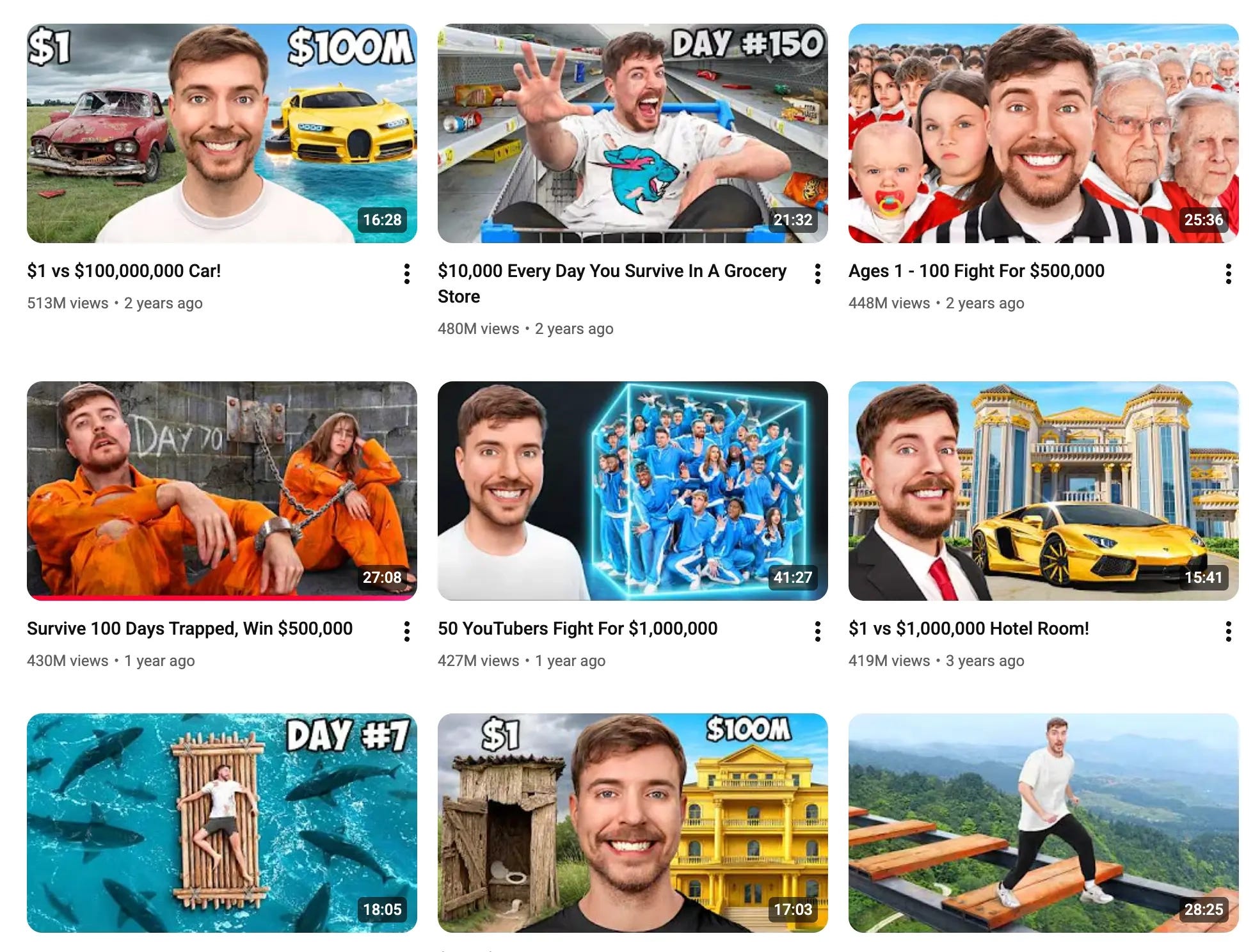
In many ways, these methods and techniques were born out of the right intentions. My years of work in usability, accessibility, and information architecture has taught me to ask questions like, What good is an email no one opens, or a video no one watches? And shouldn’t it be easy for people to find what they need? But there’s point at which the drive toward frictionlessness becomes so complete that everything begins to blur together. I can’t tell you how many times I’ve been on my phone and unsure about what app I’m in, what site I’m on, or whose content I’m seeing. Is it Uber or Lyft? Airbnb or Vrbo? Instagram or TikTok? And that is the deeper problem we keep mislabeling as AI.
The So What
Blaming everything we don’t like on AI distracts us from more meaningful critiques of how the technology is entering our lives — and lets us pretend we had nothing to do with getting here. We built a world around optimal standards and averages, then trained machines on that exact philosophy. So of course the machines mushed everything together and handed it back to us in a homogenized, uncanny package. Banning, blaming, or fully surrendering to AI will not solve that problem. We put ourselves here, so it’s up to us to move ourselves forward.
If we want something interesting, new, or genuinely creative, we have to break out of the average. We can cede the mediocre to the robots. Let AI handle the competent, functional, and quite frankly forgettable work that already exists in abundance. And that creates an opportunity for us. We don’t have to throw out everything we’ve learned about what makes something usable or effective. We can build on those conventions, then take bigger swings when the idea calls for it.
For example, some recent client work brought me to Olivia Rodrigo’s website. It looks like a retro 2000s webpage: her bedroom, a poster you click for tour dates, and objects to poke around. When I first saw the site, my instinct was to roll my eyes because, as someone who designed websites like this 20 years ago, I remember exactly why we stopped doing it. We learned to put buttons in predictable places because consistency reduces cognitive load. And we were right. Those conventions made the internet easier to use, more accessible, and more intuitive. But, as a consequence, we also learned to optimize the personality out of the experience. Rodrigo’s site is less efficient, but it has a point of view. You explore it because you don’t already know exactly what you’re going to find. It reminds us that sometimes, a little friction is exactly what makes an experience engaging.
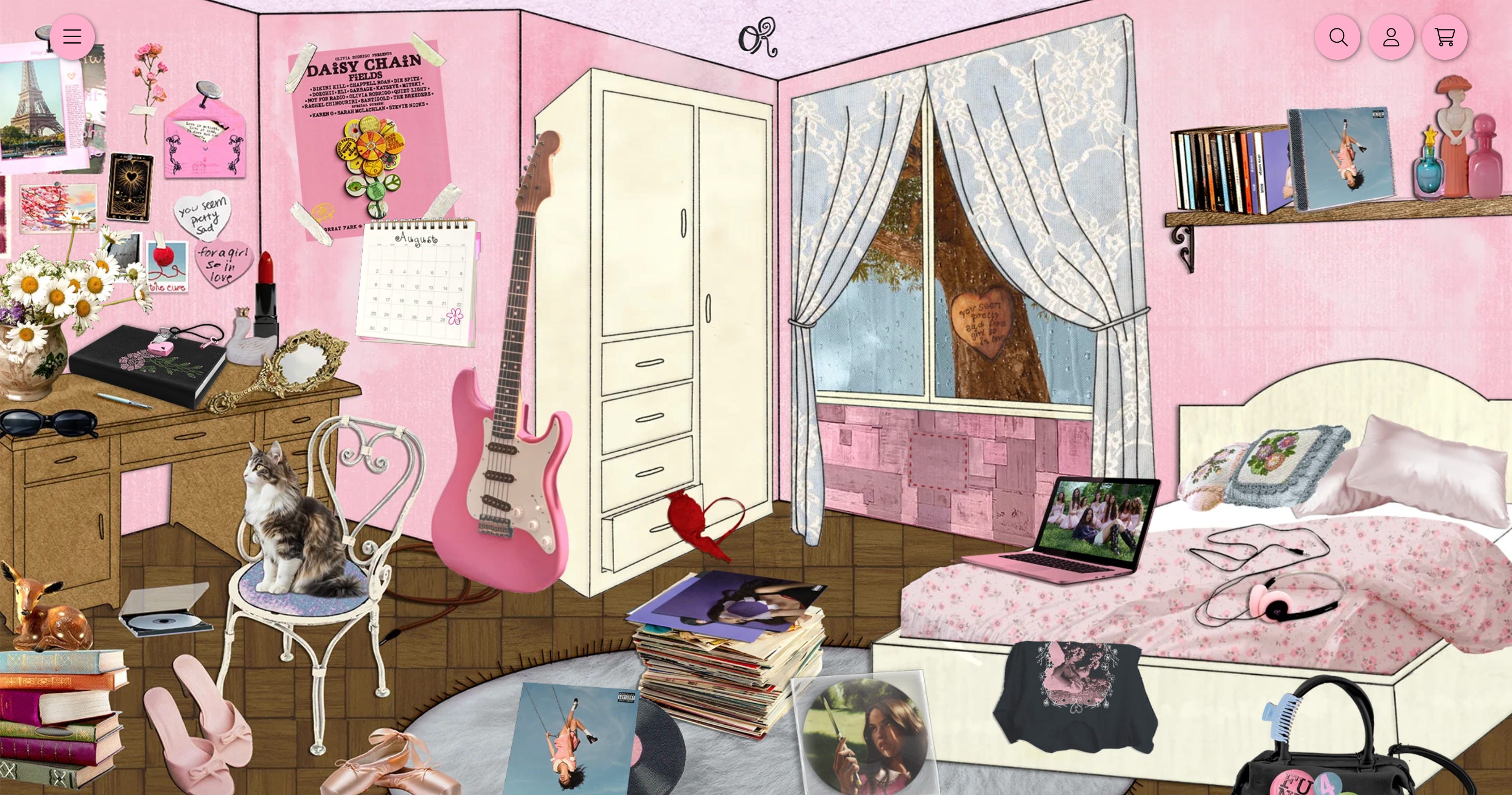
Maybe that’s the opportunity AI gives us: permission to stop obsessing over getting everything right. Creating something human (even if AI is present somewhere in the process) means being willing to get a little messy again. To try something that might not perform, might not convert, might not be immediately understood — and see what happens.
Which brings me back to how we critique other people’s work. We should absolutely call out an AI-generated sandwich that misrepresents a restaurant’s food. But we also need to get past “AI” as the end of the critique. If we want a more interesting creative culture, we have to make room for work that can actually succeed or fail on its own merits.
✉️ If you haven’t subscribed, click the button below so you don’t miss the next one.


As someone who moved into brand and product design from advertising and film this feels like a reckoning a decade and a half in the making. Usability is not an absolute term. It’s relative to the user, and what is good for a government website is not necessarily good for a band website. Designers have come up in a world where they think Stripe is inspiring.
Designers create experiences, and the purpose of experiences is varied. If design is to remain relevant designers will have to remember that.